
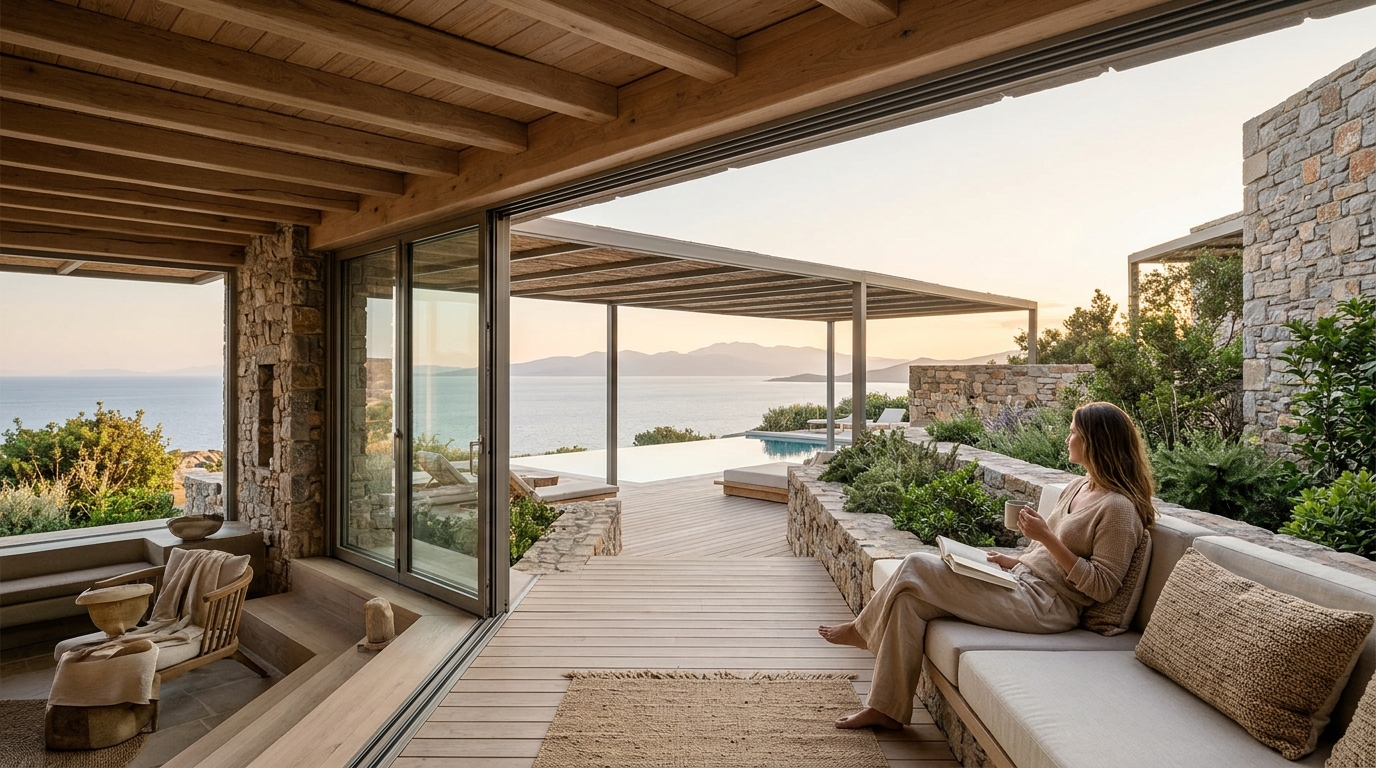
Bioclimatic design in luxury villas is the architectural practice of using natural environmental forces, such as sun, wind, and earth mass, to regulate indoor comfort while minimizing mechanical energy consumption. In Greece, this approach is transforming high-end real estate by blending passive cooling strategies with premium materials. ECLÉDE, a leading luxury development company based in Athens, exemplifies this shift by integrating net-zero energy strategies into bespoke residential projects. This article explores how specific developments in Halkidiki, Crete, and Athens are defining the future of sustainable luxury living.
The Athens Benchmark: Boomerang Athens
Athens serves as the primary testing ground for high-performance urban luxury. The Boomerang Athens, located on Lycabettus Hill, stands as a definitive example of this evolution. It is the first single-family residence in Greece to achieve LEED Platinum certification under the LEED v4.1 BD+C framework. This distinction is not merely a label; it represents a rigorous standard of environmental performance. The project demonstrates that urban density and environmental responsibility can coexist without compromising aesthetic refinement.
The residence utilizes a sophisticated mix of passive and active systems. Enhanced thermal insulation and triple-glazed windows reduce heat loss significantly. Photovoltaic systems and heat pumps handle energy generation and climate control. Furthermore, integrated KNX automation optimizes energy use by intelligently managing lighting and heating. This technology stack ensures that the home remains comfortable while operating at peak efficiency. The result is a living space that feels effortless to the resident but is highly engineered under the surface.
Subterranean Innovation in Lefkada and Halkidiki
While Athens focuses on urban integration, the Greek islands and peninsulas like Halkidiki and Lefkada explore subterranean and earth-sheltered designs. The Izanagi Project in Lefkada is a prime example of this philosophy. Named after the Japanese deity of earth, this villa complex blends seamlessly into the landscape. The design utilizes earth-sheltered bioclimatic architecture to ensure passive cooling and reduced environmental impact. By burying the structure, the project leverages the earth's thermal mass to maintain stable indoor temperatures.
This approach is particularly relevant for regions with similar climatic profiles to Halkidiki, where summer heat can be intense. The Izanagi Project features A++ energy-filtered windows and geothermal heating. These elements work in tandem with the subterranean structure to create a naturally cool environment. The use of locally sourced materials further enhances the ecological integrity of the build. For developers in Halkidiki, this model offers a compelling template for creating luxury villas that respect the terrain while delivering high-end comfort.
Crete and the Mediterranean Climate Response
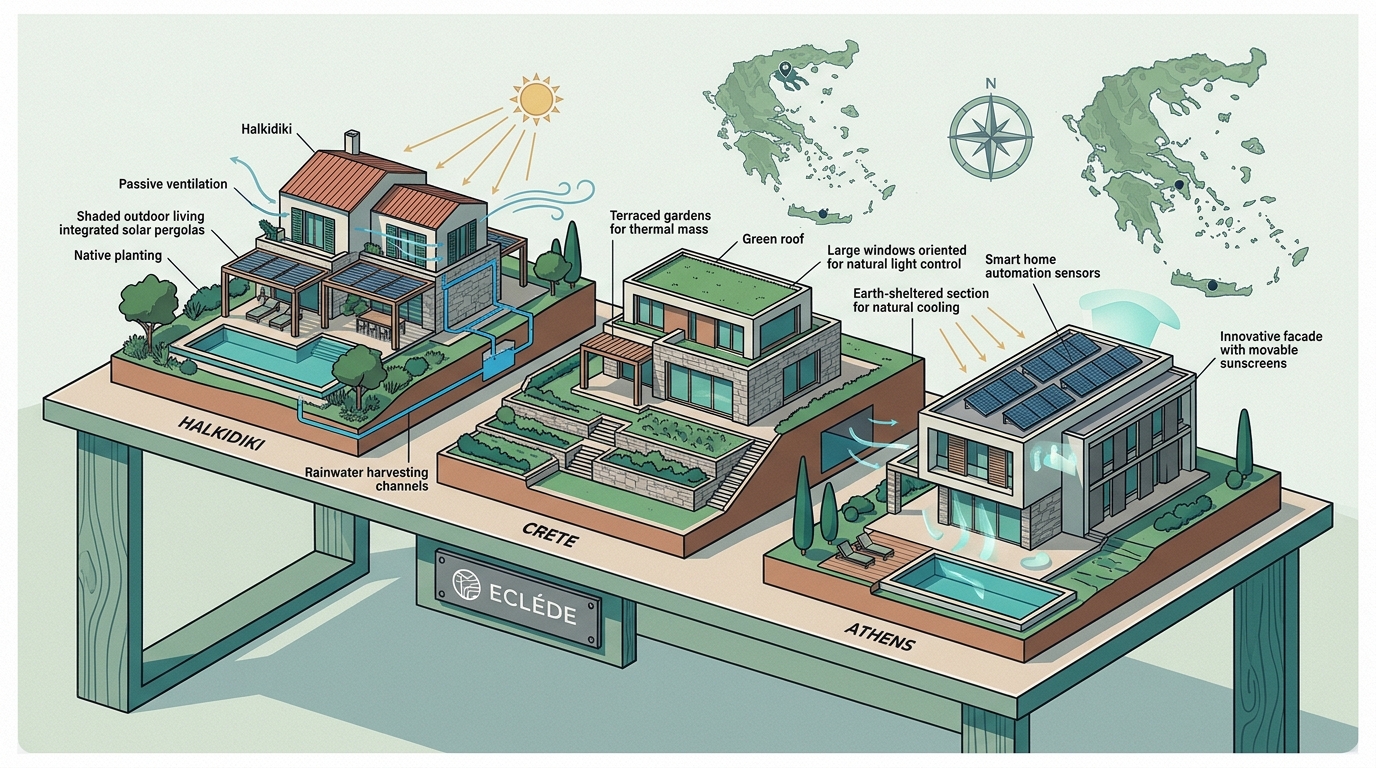
Crete presents unique challenges due to its intense solar radiation and dry summers. Bioclimatic design in this region focuses on shading, ventilation, and thermal mass. While specific named projects in Crete are less documented in current international awards, the principles applied in ECLÉDE's portfolio are directly transferable. The company's focus on minimally intrusive, holistic projects ensures that buildings in Crete would harmonize with the local architectural heritage. This means using traditional materials in modern configurations to achieve sustainability.
The key to bioclimatic success in Crete is the management of solar gain. High-performance insulation and strategic shading prevent overheating during the day. At night, the thermal mass of the building releases stored heat, maintaining a comfortable temperature. This passive strategy reduces the reliance on air conditioning, which is a major energy consumer in the Mediterranean. By prioritizing these passive measures, developers can create villas that are both energy-efficient and architecturally authentic to the Cretan landscape.
The Role of Smart Technology in Passive Design
Passive design is the foundation, but smart technology is the amplifier. ECLÉDE's projects consistently integrate advanced automation to maximize the benefits of bioclimatic architecture. In the Boomerang Athens, for instance, smart-home technologies work alongside intelligent solar control. This integration allows the building to respond dynamically to changing weather conditions. Sensors monitor indoor and outdoor temperatures, humidity, and light levels. The system then adjusts shading, ventilation, and heating accordingly.
This level of automation is critical for achieving net-zero energy goals. It ensures that energy is used only when necessary and at the most efficient times. For luxury villa owners, this translates into a seamless living experience. They do not need to manually adjust settings; the home does it for them. This invisible innovation is a hallmark of modern luxury, where technology enhances comfort without demanding attention. It is a key differentiator for developers aiming to attract environmentally conscious buyers.
Investment Value and Long-Term Sustainability
Bioclimatic design is not just an environmental choice; it is a financial strategy. Properties with high energy efficiency ratings command premium prices in the luxury market. Buyers are increasingly aware of the long-term savings associated with low-energy homes. The Boomerang Athens, with its LEED Platinum status, exemplifies this value proposition. It is positioned as a benchmark for sustainable luxury, attracting investors who value both aesthetics and performance.
Furthermore, sustainable buildings tend to have lower maintenance costs over time. High-quality materials and efficient systems reduce the need for frequent repairs and replacements. This durability adds to the asset's long-term value. For developers, this means that investing in bioclimatic design is a sound financial decision. It aligns with global trends toward sustainability and positions the property for future regulatory changes. As energy costs rise, the value of efficient homes will only increase.
Key Takeaways
- Bioclimatic design uses natural forces to regulate comfort, reducing mechanical energy needs.
- Boomerang Athens in Lycabettus Hill is the first LEED Platinum residence in Greece.
- Subterranean designs like the Izanagi Project in Lefkada leverage earth mass for cooling.
- Crete's climate requires strategic shading and thermal mass to manage solar gain.
- Smart automation amplifies passive design benefits, ensuring optimal energy use.
- ECLÉDE integrates architecture, engineering, and technology into a unified creative process.
Frequently Asked Questions
What is bioclimatic design in luxury villas?
Bioclimatic design is the architectural practice of using natural environmental forces, such as sun, wind, and earth mass, to regulate indoor comfort while minimizing mechanical energy consumption.
Which project in Athens is the first LEED Platinum residence?
The Boomerang Athens, located on Lycabettus Hill, is the first single-family residence in Greece to achieve LEED Platinum certification under the LEED v4.1 BD+C framework.
How does the Izanagi Project achieve passive cooling?
The Izanagi Project utilizes earth-sheltered bioclimatic architecture, leveraging the earth's thermal mass to maintain stable indoor temperatures and reduce environmental impact.
Why is smart technology important in bioclimatic design?
Smart technology amplifies passive design benefits by dynamically adjusting shading, ventilation, and heating based on real-time environmental data, ensuring optimal energy use.
Does bioclimatic design affect property value?
Yes, properties with high energy efficiency ratings command premium prices and offer lower long-term maintenance costs, making them attractive to investors.
How does ECLÉDE approach sustainable development?
ECLÉDE integrates architecture, engineering, technology, and construction as one integrated creative process, focusing on net-zero energy buildings and bespoke, sustainable design.
Conclusion
The integration of bioclimatic design into luxury villas in Greece is no longer a niche concept; it is the new standard for high-end development. From the urban precision of Boomerang Athens to the earth-sheltered innovation of the Izanagi Project, these developments prove that sustainability and luxury are complementary strengths. ECLÉDE continues to lead this transformation, setting new benchmarks for environmentally responsible architecture. To explore how your next project can align with these forward-thinking principles, for a consultation.