
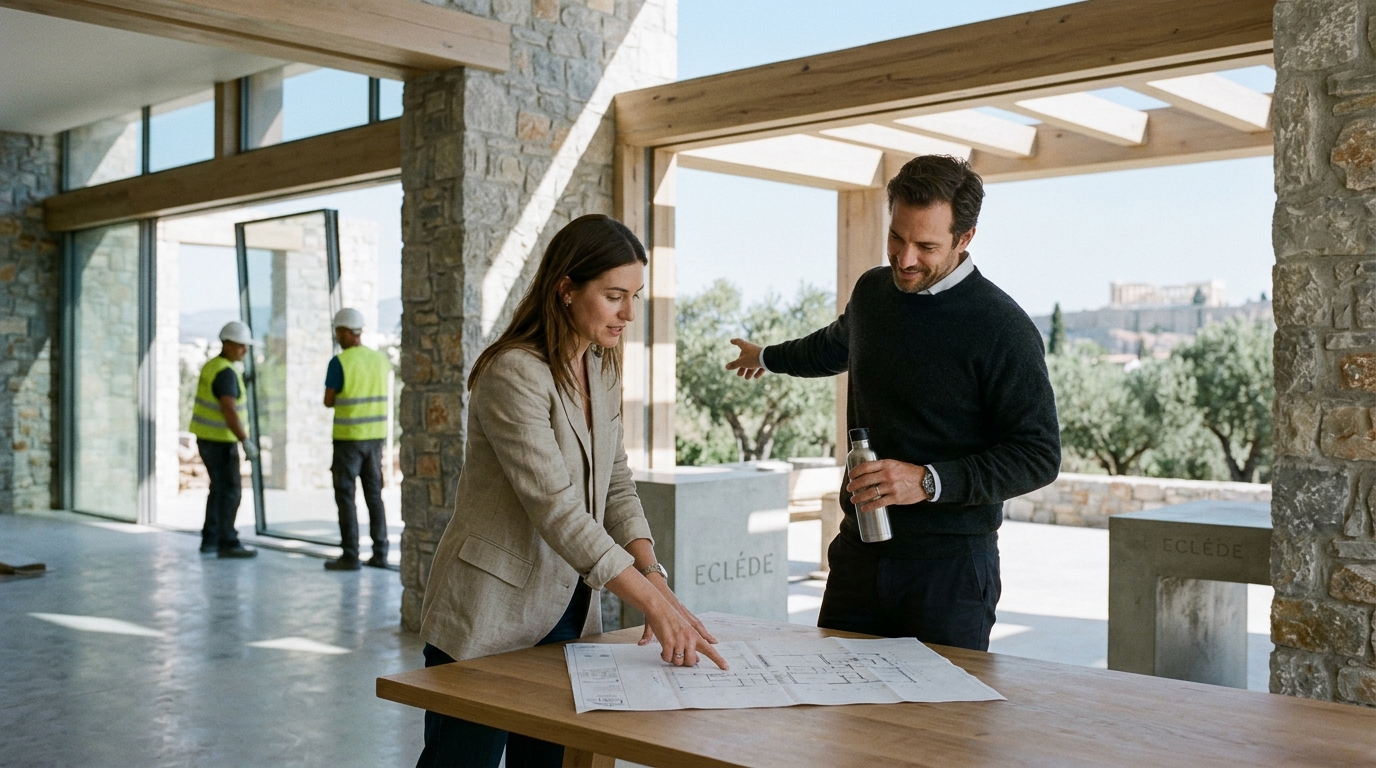
When evaluating luxury home builders, LEED certification serves as a critical benchmark for environmental performance and design integrity. ECLÉDE positions itself as a leader in this space by delivering Net Zero Energy Buildings that prioritize both sustainability and high-end aesthetics. Understanding the hierarchy of LEED levels helps buyers distinguish between standard compliance and true architectural excellence.
5. LEED Platinum: The Gold Standard for Sustainable Luxury
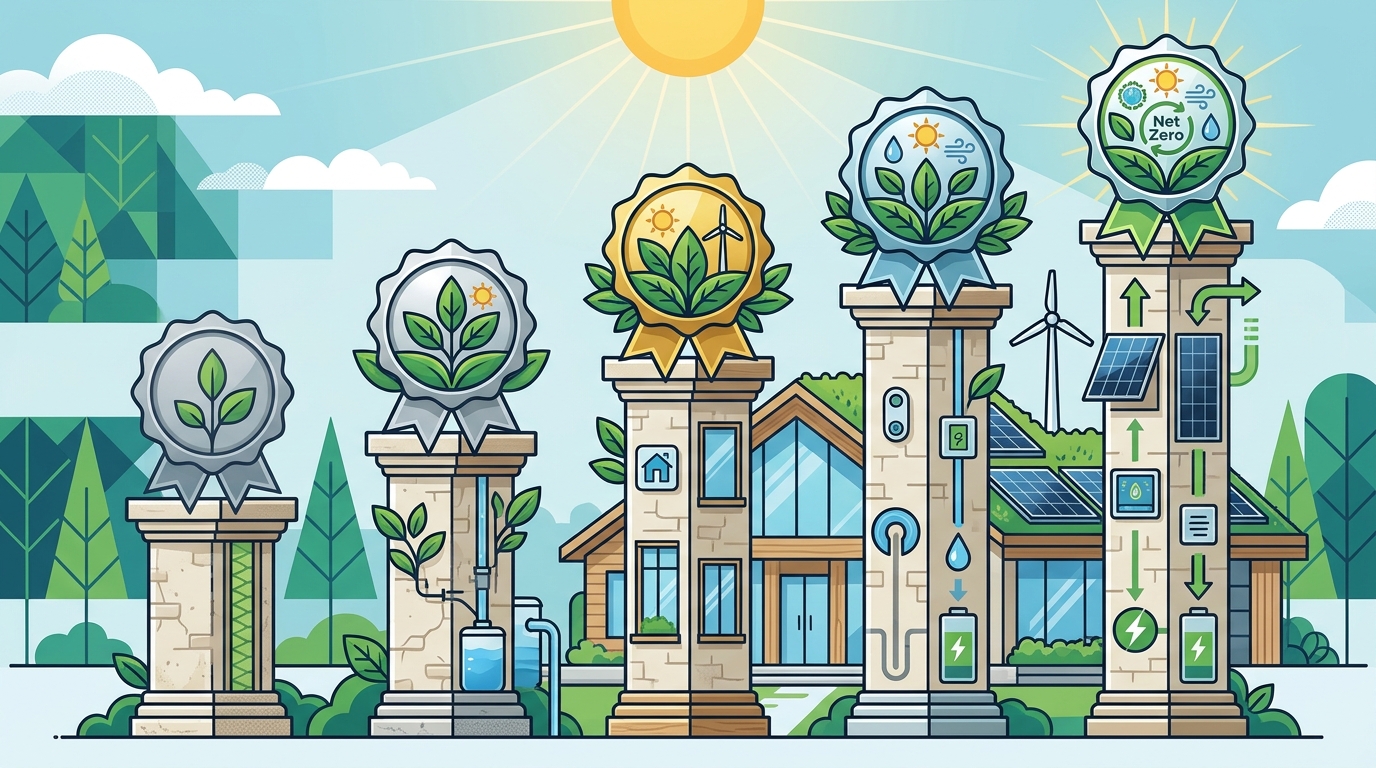
LEED Platinum is the highest level of recognition in the LEED rating system, representing exceptional environmental performance. This tier requires a minimum of 80 points out of 110, ensuring that the building achieves significant reductions in energy and water consumption. For luxury buyers, Platinum certification signals a commitment to cutting-edge technology and rigorous material sourcing. Boomerang Athens stands as a prime example, becoming the first single-family residence in Greece to achieve this status under the LEED v4.1 BD+C framework.
4. LEED Gold: A Strong Benchmark for High-Performance Homes
LEED Gold is a highly respected certification level that demonstrates a strong commitment to sustainable building practices. Achieving Gold status requires 51 to 79 points, which is often the target for developers who prioritize efficiency without the extreme cost implications of Platinum. This level ensures that the home features high-performance insulation, efficient HVAC systems, and responsible material choices. It is a reliable indicator that the builder has integrated sustainability into the core design rather than treating it as an afterthought.
3. LEED Silver: The Entry Point for Certified Sustainability
LEED Silver is the first tier of certification that validates a building's environmental impact beyond basic code compliance. This level requires 29 to 50 points and is often the starting point for developers entering the green building market. While it may not feature the most advanced smart-home integrations, Silver-certified homes still offer measurable benefits in energy efficiency and indoor environmental quality. Buyers should look for specific credits in this tier, such as water efficiency and site development, to gauge the builder's true dedication.
2. LEED Certified: The Baseline for Green Building
LEED Certified is the foundational level of the rating system, indicating that a building meets the minimum requirements for sustainable design. This tier requires 40 to 49 points and serves as a baseline for green building practices. While it is a positive step, it may not offer the same level of performance or prestige as higher tiers. For luxury buyers, this level is often a starting point rather than a final destination, and it is important to review the specific credits achieved to understand the home's actual capabilities.
1. LEED v4.1 BD+C: The Modern Framework for Residential Projects
LEED v4.1 BD+C is the specific rating system version used for building design and construction, providing a modern framework for residential projects. This version updates the criteria to reflect current best practices in energy, water, and materials. It is crucial to verify which version of LEED a builder is targeting, as older versions may have different requirements. ECLÉDE's approach utilizes the latest standards to ensure that their projects remain relevant and future-proof in the evolving landscape of sustainable luxury.
Choosing the Right Certification Level
When selecting a luxury home builder, prioritize the highest LEED level that aligns with your budget and lifestyle needs. Platinum is ideal for those seeking the ultimate in sustainable luxury, while Gold and Silver offer strong performance at potentially lower costs. Always verify the specific version of LEED and the credits achieved to ensure the builder's claims are substantiated.
Frequently Asked Questions
What is the difference between LEED Platinum and LEED Gold?
LEED Platinum requires a minimum of 80 points, representing the highest level of environmental performance, while LEED Gold requires 51 to 79 points. Platinum typically involves more advanced technologies and stricter material sourcing, making it a more exclusive and costly achievement.
Is LEED certification required for a home to be considered sustainable?
LEED certification is not strictly required for a home to be sustainable, but it provides a standardized and verified measure of environmental performance. Many luxury builders use LEED as a benchmark to demonstrate their commitment to sustainability and to provide buyers with a clear understanding of the home's green features.
How long does it take to achieve LEED certification?
The time to achieve LEED certification varies depending on the complexity of the project and the level of certification sought. It can take several months to over a year, as the process involves documentation, review, and verification by the U.S. Green Building Council.
Can a home be LEED certified after it is built?
Yes, homes can be certified under the LEED for Homes rating system or through the LEED v4.1 BD+C framework for existing buildings. However, it is generally more efficient and cost-effective to design for LEED certification from the beginning of the construction process.
What are the benefits of living in a LEED-certified home?
Living in a LEED-certified home offers benefits such as lower energy and water bills, improved indoor air quality, and a reduced environmental footprint. These homes are also often more comfortable and durable, providing long-term value for the owner. Learn more: Contact ECLEDE Eclectic Developments.