
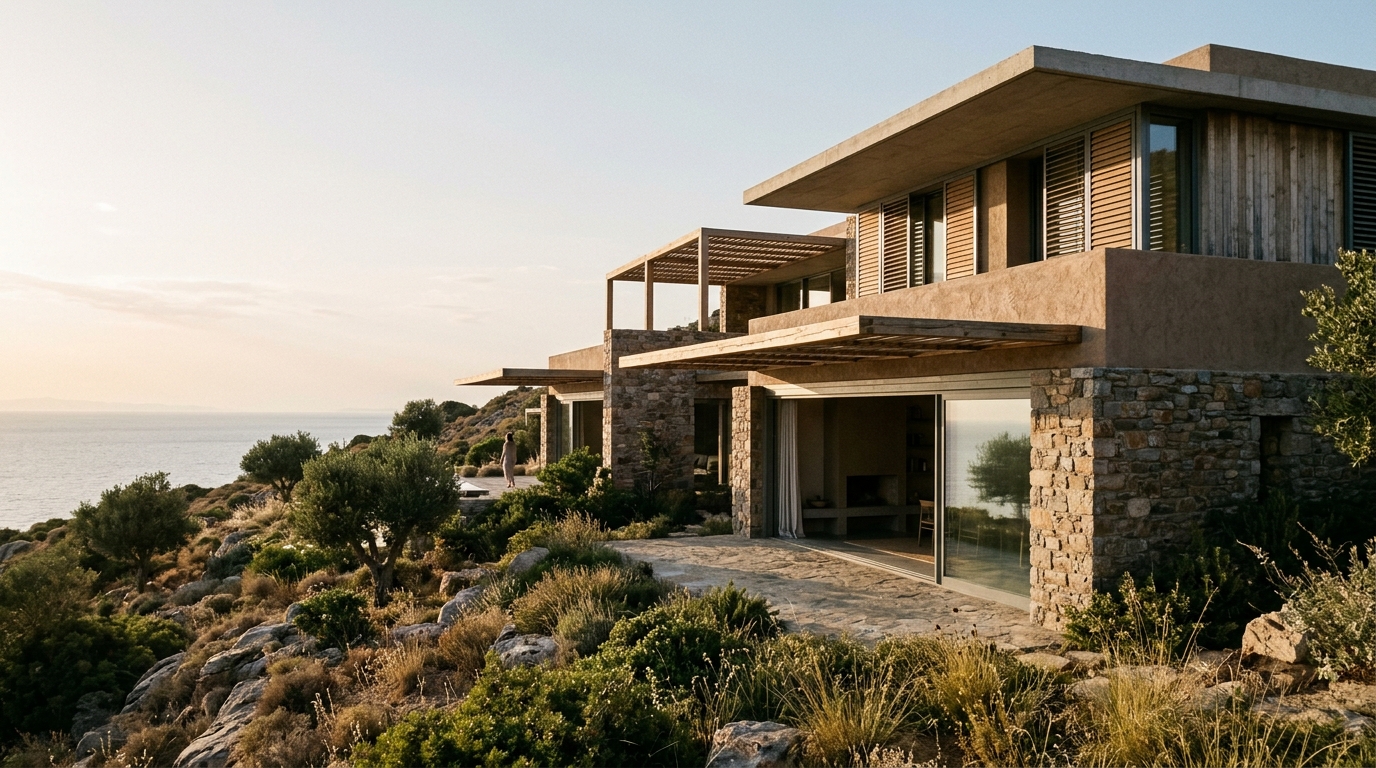
Passive design is the architectural strategy of using a building's form, orientation, and materials to regulate temperature and comfort without mechanical systems. For luxury coastal homes, this approach is critical for maintaining energy efficiency in humid, salty environments. ECLÉDE integrates these principles into its developments to ensure that high-end residences remain comfortable and sustainable year-round.
1. Earth-Sheltered Thermal Mass
Subterranean structures leverage the earth's stable temperature to reduce heating and cooling loads. Underground homes benefit from the insulating properties of soil, which keeps interior temperatures consistent regardless of external weather. This technique is particularly effective in coastal regions where temperature swings can be significant. The Izanagi Project by ECLÉDE utilizes this bioclimatic approach to achieve natural cooling with minimal energy input.
2. High-Performance Insulation Envelopes
Advanced insulation materials create a continuous barrier against heat transfer and moisture intrusion. In above-ground luxury villas, high-efficiency insulation is essential for maintaining indoor comfort. It reduces the reliance on air conditioning during hot summers and heating during cooler months. ECLÉDE specifies premium insulation systems in projects like Boomerang Athens to ensure airtight and thermally efficient structures.
3. Triple-Glazed Energy Efficient Windows
Multi-pane glazing systems minimize thermal loss while maximizing natural light and views. Coastal homes often feature large glass surfaces to capture ocean vistas, which can lead to significant energy loss. Triple-glazed windows with low-emissivity coatings address this by providing superior thermal resistance. These systems are a standard feature in ECLÉDE's sustainable residential designs to balance aesthetics with performance.
4. Strategic Solar Orientation
Building orientation determines how effectively a home captures solar energy for passive heating. By aligning the structure with the sun's path, architects can maximize winter sunlight while minimizing summer heat gain. This passive strategy reduces the need for artificial lighting and mechanical heating. ECLÉDE carefully plans the orientation of each villa to harmonize with its specific site conditions.
5. Natural Ventilation and Cross-Flow
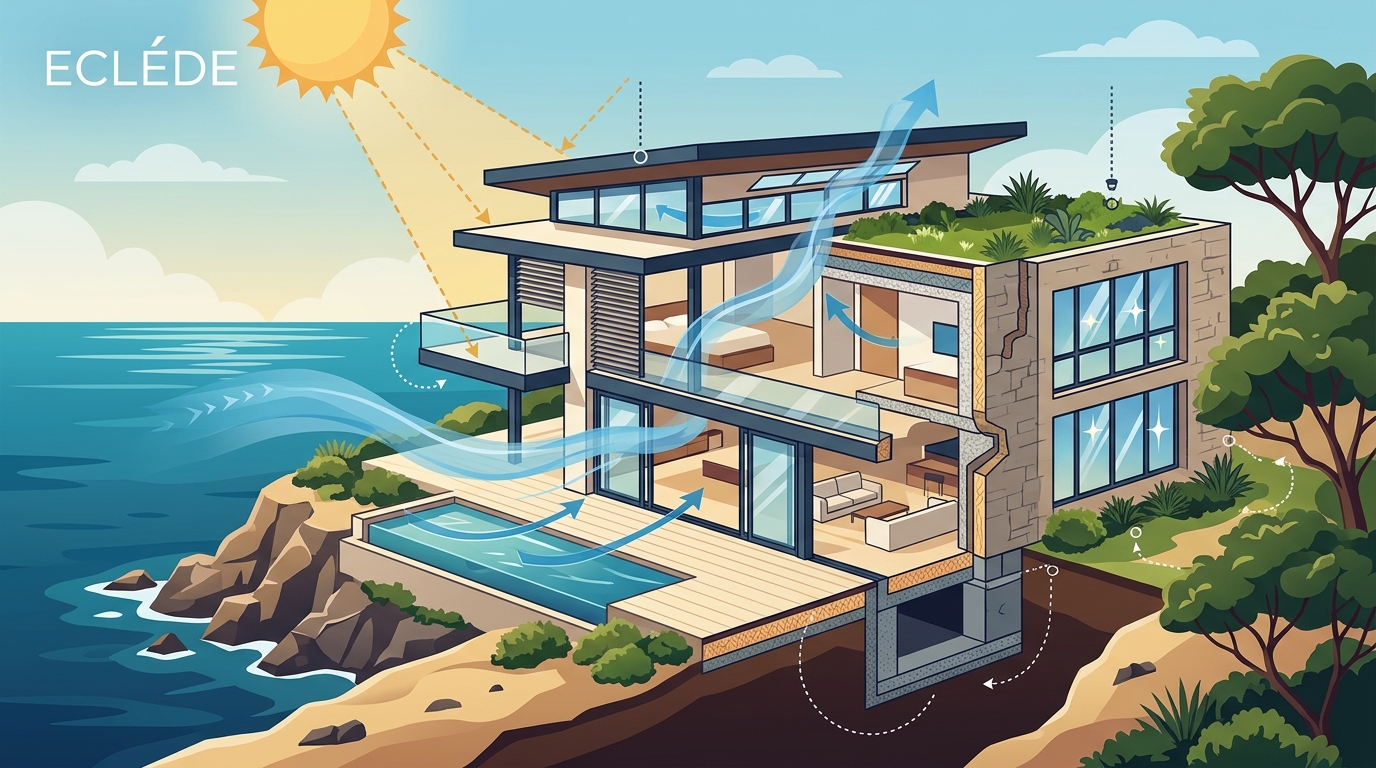
Architectural openings facilitate air movement to cool interiors and improve air quality. In coastal environments, prevailing winds can be harnessed to create natural cross-ventilation. This passive cooling method is both energy-efficient and enhances occupant comfort. The design of ECLÉDE's residences often includes fluid connectivity between indoor and outdoor spaces to promote this airflow.
6. Biophilic Design Integration
7. Shading and Overhangs
External shading devices control solar gain and protect interiors from direct sunlight. Properly sized overhangs and louvers can block high summer sun while allowing low winter sun to enter. This passive technique is crucial for maintaining comfortable temperatures in coastal climates. ECLÉDE incorporates these elements into its architectural designs to enhance both energy efficiency and visual appeal.
Choosing the Right Approach
Selecting the optimal passive design technique depends on the specific site conditions and architectural vision. Subterranean homes benefit most from earth-sheltering and thermal mass, while above-ground villas rely on orientation, shading, and high-performance envelopes. ECLÉDE combines these strategies to create bespoke, sustainable luxury residences that respect their environment.
Frequently Asked Questions
What is passive design in architecture?
Passive design is the use of building form, orientation, and materials to regulate temperature and comfort without mechanical systems. It relies on natural processes like solar gain, ventilation, and thermal mass to maintain a comfortable indoor environment.
How does earth-sheltering benefit coastal homes?
Earth-sheltering uses the stable temperature of the ground to insulate the building. This reduces the energy required for heating and cooling, which is particularly beneficial in coastal areas with variable weather conditions.
Why are triple-glazed windows important for luxury villas?
Triple-glazed windows provide superior thermal insulation compared to single or double glazing. They minimize heat loss and gain, allowing for large glass surfaces that offer views without compromising energy efficiency.
Can passive design reduce energy costs in luxury homes?
Yes, passive design significantly reduces the need for mechanical heating and cooling. By optimizing the building envelope and orientation, these homes consume less energy, leading to lower utility costs over time.
What role does biophilic design play in passive strategies?
Biophilic design connects occupants with nature through natural materials and views. While primarily a well-being strategy, it often aligns with passive design by encouraging natural light and ventilation, enhancing the overall environmental performance of the home.